
You hit the opener button on your way to work and the door hesitates, then lurches up with a jerk you've never felt before. Or maybe you walk past the garage on a Saturday morning and notice the door is sitting slightly crooked, one side lower than the other. Nothing broke. Nothing fell. But something changed, and that nagging feeling that your springs are 'getting there' is usually right.
Torsion and extension springs don't typically fail without warning. They wear down over hundreds or thousands of open-close cycles, and in a climate like ours, humidity, rain, and pollen speed that process along. Rust creeps into coils during our wet stretches, pine pollen and grit build up on the metal every spring, and the occasional ice storm puts a sudden cold-weather strain on parts that were already fatigued. The good news is that a worn spring usually gives you clues before it gives out. Here's how to check.
First, Know Which Type You Have
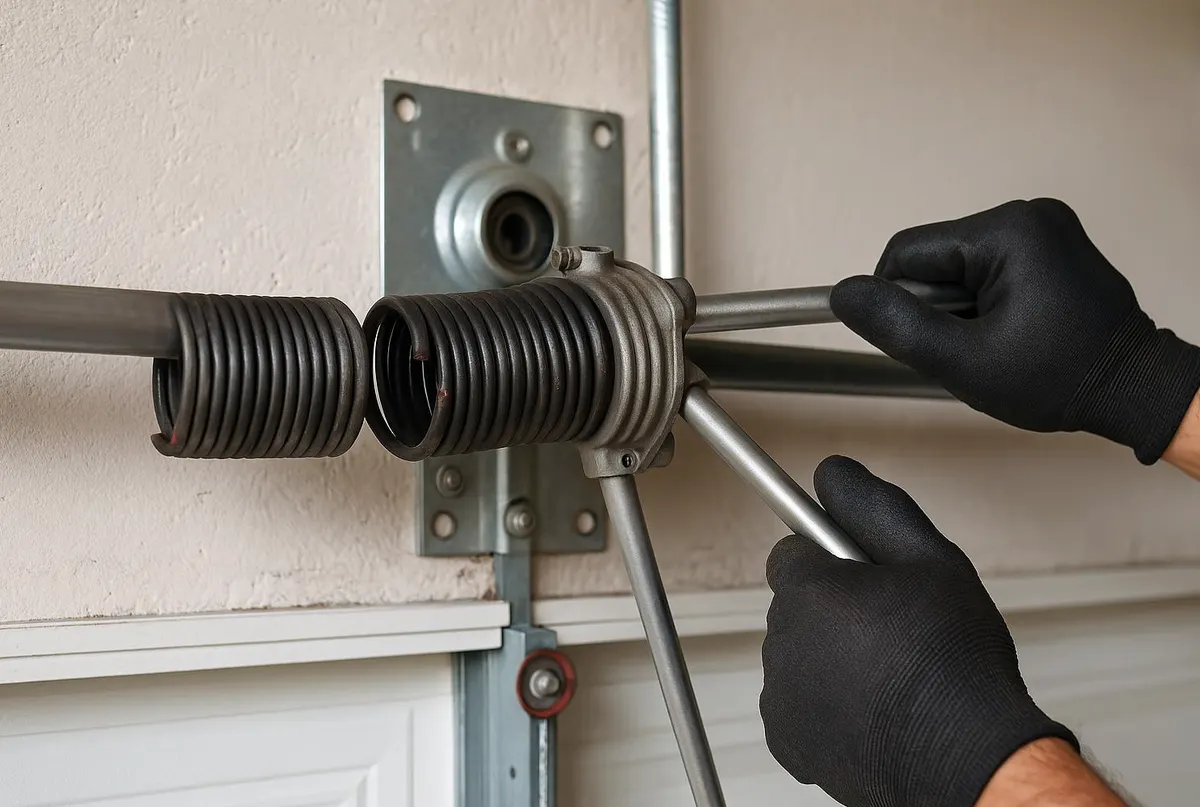
Before you run through the checklist, look up. If you see one or two long springs mounted horizontally above the closed door, directly over the track, that's a torsion spring setup. If you see a stretched spring running along each of the horizontal tracks near the ceiling, with the spring extending and contracting as the door moves, that's an extension spring setup. The warning signs overlap, but a few are specific to one type, noted below.
The Walk-Through Checklist
1. Look for a visible gap in the torsion spring coils
With the door closed, look closely at the torsion spring. A healthy spring has coils sitting tightly against each other. If you see a gap or separation anywhere along the coil, that's a sign the spring has stretched past its working tension or is cracked. If this fails: the door loses lifting power on one side, which is often what causes it to hang crooked.
2. Check for rust, pitting, or discoloration
Run your eyes (not your bare hand) along the length of the spring. Surface rust from humidity and heavy rain is common on older springs, but pitting, flaking, or dark orange buildup in the coil grooves weakens the metal from the inside out. If this fails: the spring becomes brittle and can snap under normal tension, often without any unusual noise beforehand.
3. Do the balance test
With the opener disconnected (pull the red release cord), lift the door manually about halfway and let go. A door with good springs should stay roughly in place. If it drops like dead weight or shoots upward on its own, the springs are no longer matched to the door's weight. If this fails: your opener is doing work the springs should be doing, which wears out the opener motor faster and signals the springs are close to the end.
4. Listen for new noises during operation
Pay attention to grinding, popping, or a sharp metallic bang as the door moves. A single loud pop during operation can mean a spring coil has already cracked internally, even if it hasn't separated yet. If this fails: the noise usually gets worse over days or weeks until the spring lets go completely, often at the most inconvenient moment.
5. Watch the door's speed and smoothness
Compare how the door moves now to how it moved a year ago. A door that used to glide smoothly but now jerks, stutters, or slows noticeably partway through its travel is telling you the springs can no longer provide even tension. If this fails: uneven movement puts extra stress on the cables, rollers, and opener, turning a spring problem into a multi-part repair.
6. Inspect the safety cables on extension springs
If you have extension springs, there should be a cable running through the center of each spring, anchored at both ends. This cable is there to contain the spring if it breaks. Check that it's intact and not frayed. If this fails: a broken extension spring with no working safety cable can whip loose with enough force to damage the door or injure someone nearby.
7. Look for uneven stretching between the two extension springs
With the door closed, compare the two extension springs side by side. They should look the same length and tension. If one is visibly more stretched than the other, it's wearing out faster and compensating for its partner. If this fails: the door will start to lean or bind in the tracks as the mismatch gets worse.
8. Count the years, not just the symptoms
Most springs are rated for a number of open-close cycles, which for an average household works out to several years of daily use. If you can't remember the last time yours were replaced, and the house has had the same door for a long time, age alone is a reason to get them inspected, even if nothing looks obviously wrong yet.
Why New Bern's Weather Speeds This Up
Heavy rain and summer humidity keep moisture sitting on unprotected metal longer than in drier climates, which is why rust shows up on springs here sooner than homeowners expect. Pollen season adds a layer of fine grit that works its way into the coils and dries out factory lubrication. And when an ice storm rolls through, the sudden temperature swing can make already-brittle metal more likely to crack. None of this means your springs will fail faster than anywhere else, but it does mean a yearly visual check is worth the five minutes.
When to Call New Bern Garage Door
If you've gone through this checklist and found gaps in the coils, visible rust and pitting, a door that won't hold its position, or a mismatch between two extension springs, it's time to stop troubleshooting on your own. Springs are under extreme tension and are not a safe DIY repair. Our team handles spring replacement for both torsion and extension systems, matched correctly to your door's weight and size, and we can fold that into a full garage door maintenance visit to check rollers, cables, and hardware at the same time so you're not back in the garage asking the same question in six months.
If your garage door is giving you any of the signs above, call New Bern Garage Door. We serve New Bern, Havelock, Bridgeton, Trent Woods, River Bend, Vanceboro, Pollocksville, and James City, and we'll come take a look, explain exactly what we find, and get it fixed right.