
The Mistake Almost Everyone Makes First
It starts the same way almost every time: the garage door won't open, someone looks up the problem, and within ten minutes they're watching a video of a guy swapping a torsion spring in his driveway in under twenty minutes. It looks simple. A spring kit costs a fraction of what a technician would charge for the same job, and the video makes the whole thing look like tightening a bolt. That's the trap. The video shows the steps, but it almost never shows how much force is actually stored in that coil, or what happens in the two or three seconds after something slips.
A standard torsion spring on a residential garage door is wound tight enough to lift a door that can weigh anywhere from 130 to over 400 pounds, depending on size and material. That tension doesn't go away when the door is down — it's sitting there, coiled, waiting for the winding bar to do its job in a controlled way. When that control is lost, the spring doesn't just "come loose." It releases that stored energy all at once.
What Actually Goes Wrong
Garage door spring injuries aren't rare freak accidents — they're a well-documented category of home repair injury, and the mechanism is almost always the same few mistakes:
- Using the wrong tool to wind the spring. Screwdrivers and makeshift rods are a common substitute for proper winding bars. They flex, they slip out of the winding cone, and when they do, the bar itself becomes a projectile moving at the speed the spring was trying to unwind.
- Not fully relaxing the tension before disconnecting anything. If the spring still has partial winds on it when a cable or fitting is removed, the remaining energy releases unpredictably, sometimes yanking the bar out of someone's hands.
- Confusing torsion springs with extension springs. These are two different systems with different failure patterns, and instructions for one don't transfer safely to the other. Extension springs that aren't properly contained can shoot several feet if they snap under load.
- Working under a door that isn't mechanically secured. If the door is up and the only thing holding it there is a cable or a spring mid-repair, a slip means the door itself comes down — on a hand, a foot, or worse.
- Installing the wrong spring entirely. Wire gauge, coil length, and wind direction all have to match the door's weight and the drum setup. Get it wrong and the spring either fails again within weeks or puts uneven strain on the opener and tracks, which creates a second, slower-building problem.
The injuries that come out of these mistakes aren't minor. Facial fractures, broken fingers, eye injuries from flying metal, and concussions from a winding bar snapping back are all documented outcomes, and they tend to happen fast — there's rarely a warning moment where someone can step back.
Why This Matters More Here
Garage door hardware in this part of North Carolina takes a beating from the environment. Heavy rain and humidity accelerate rust on springs, cables, and winding cones, which makes old hardware more likely to fail unpredictably mid-repair rather than behaving the way a video assumes it will. Pine sap and pollen buildup on tracks can make a door feel like it's binding when it's actually a spring tension issue, which leads some homeowners to misdiagnose the problem and reach for the wrong fix. And after a storm with remnant hurricane winds knocks out power, the temptation to manually force a stuck door open — without understanding why it's stuck — adds another way for things to go wrong quickly.
What Actually Prevents the Injury
If you're set on understanding the mechanics before calling someone, these are the non-negotiables that actually matter:
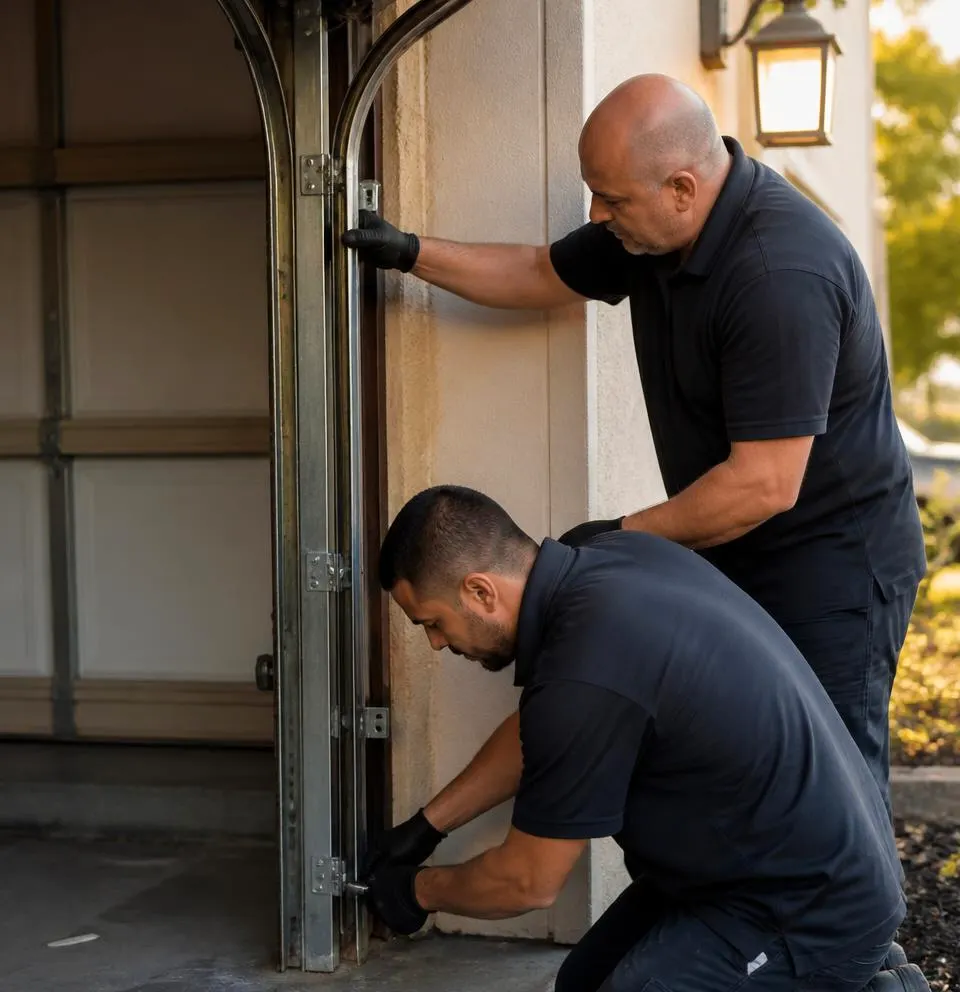
- Never do this alone. A second person isn't optional backup — torsion spring work requires someone free to react if the bar slips.
- Use the correct winding bars for the cone size, not screwdrivers, drill bits, or anything improvised. They need to seat fully and stay seated through the whole wind.
- Secure the door mechanically before doing any work — locking pliers clamped on the track just above a roller will stop the door from dropping if a cable gives way.
- Unplug the opener so it can't engage mid-repair.
- Know the spring specs before you order anything — wind direction, wire diameter, and length all have to match, and getting one wrong creates a door that's either dangerously unbalanced or due for another failure soon.
- Keep your face and body out of the spring's plane of travel at every stage, not just while winding.
Most of these aren't hard rules to follow — they're just the parts that get skipped when a job looks faster than it is.
When to Call New Bern Garage Door
If your door is sagging on one side, slamming shut faster than it used to, or an opener is straining and making a labored noise lifting the door, that's spring tension talking, and it's worth a call before it becomes a bigger failure. Our spring replacement service includes correctly identifying wire gauge, wind direction, and coil length for your specific door, winding it with proper equipment, and testing the balance afterward so the opener isn't carrying load it shouldn't be. We also offer garage door maintenance visits that catch rust and wear on springs and cables before they turn into a repair call at all — useful given how much humidity and rain this area sees year-round.
If your spring looks worn, rusted, or stretched, don't wait for it to fail on its own schedule. Call New Bern Garage Door for safe, same-day spring replacement and maintenance across New Bern, Havelock, Bridgeton, Trent Woods, River Bend, Vanceboro, Pollocksville, and James City.